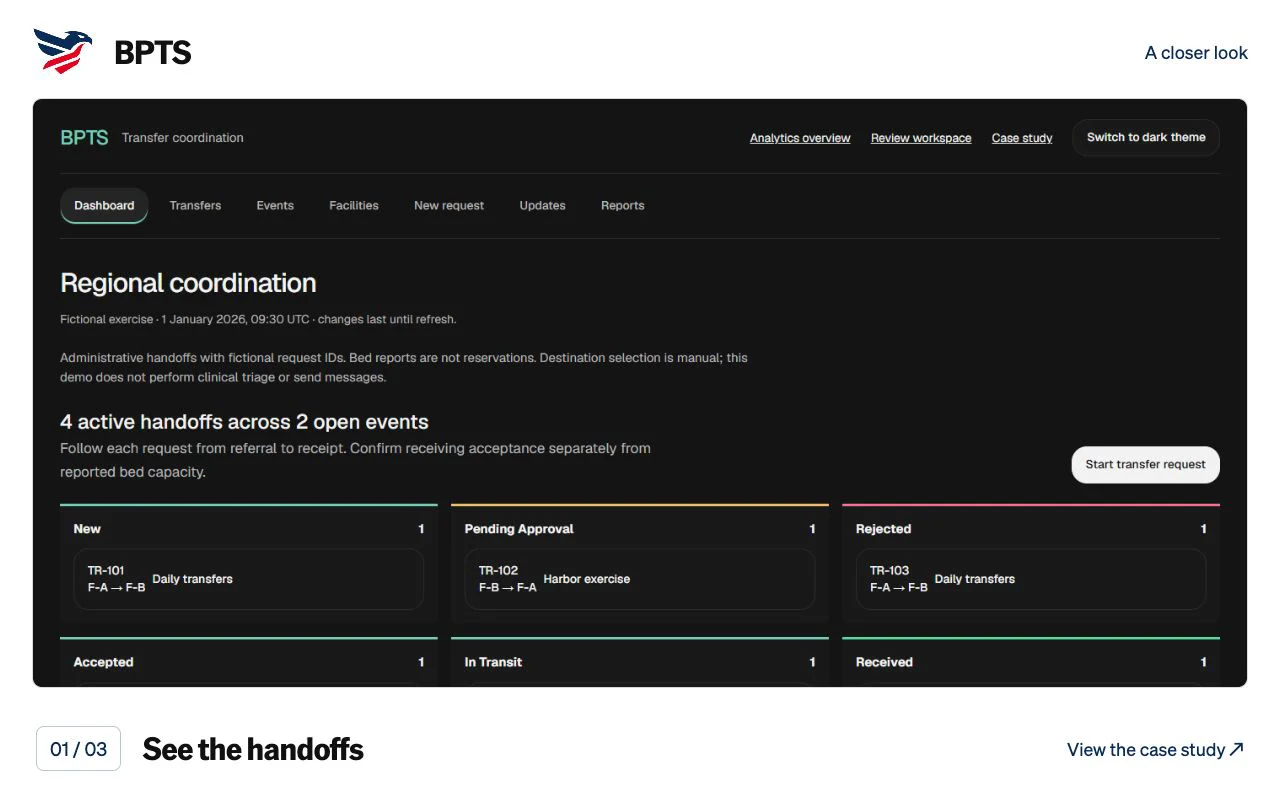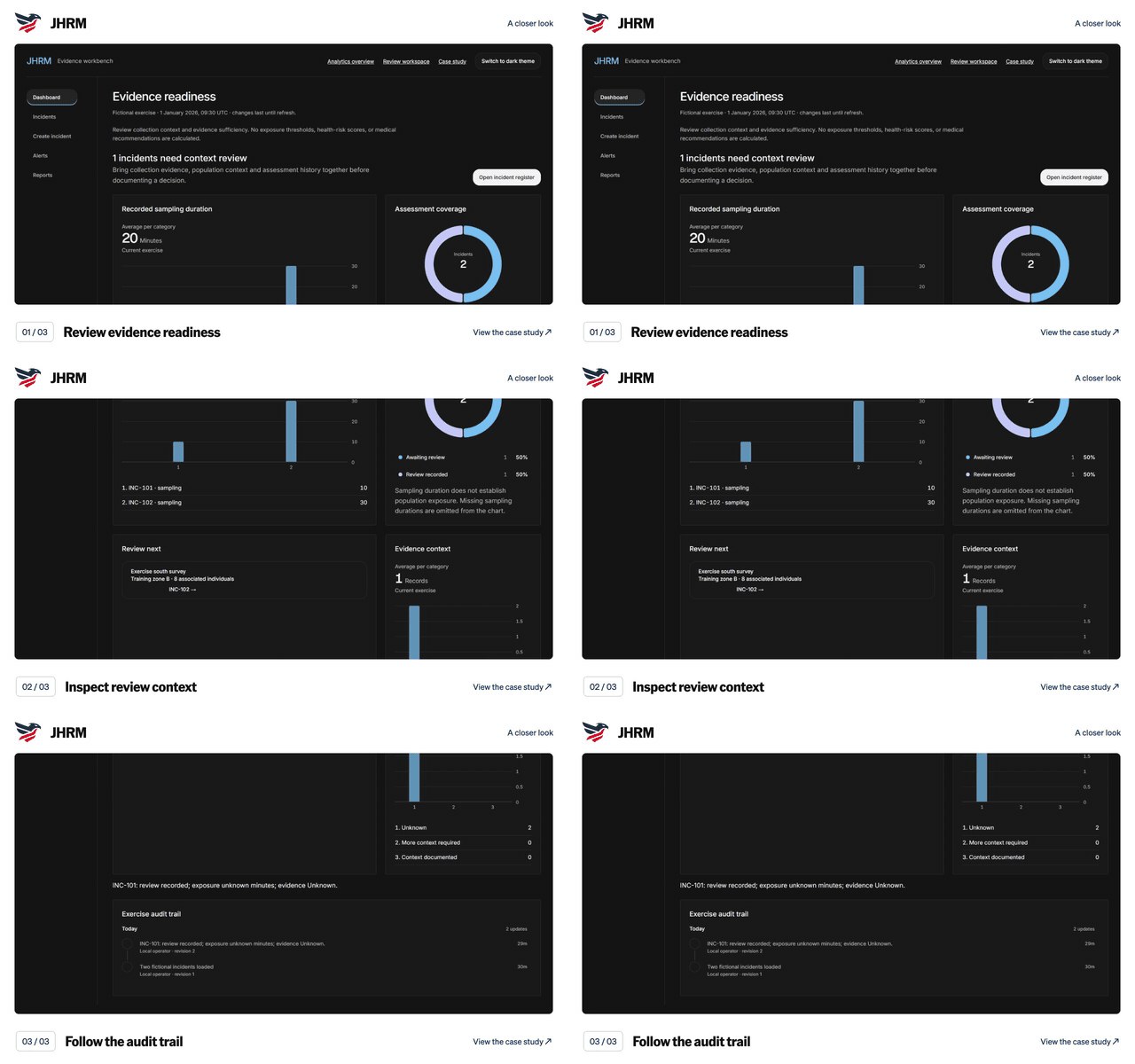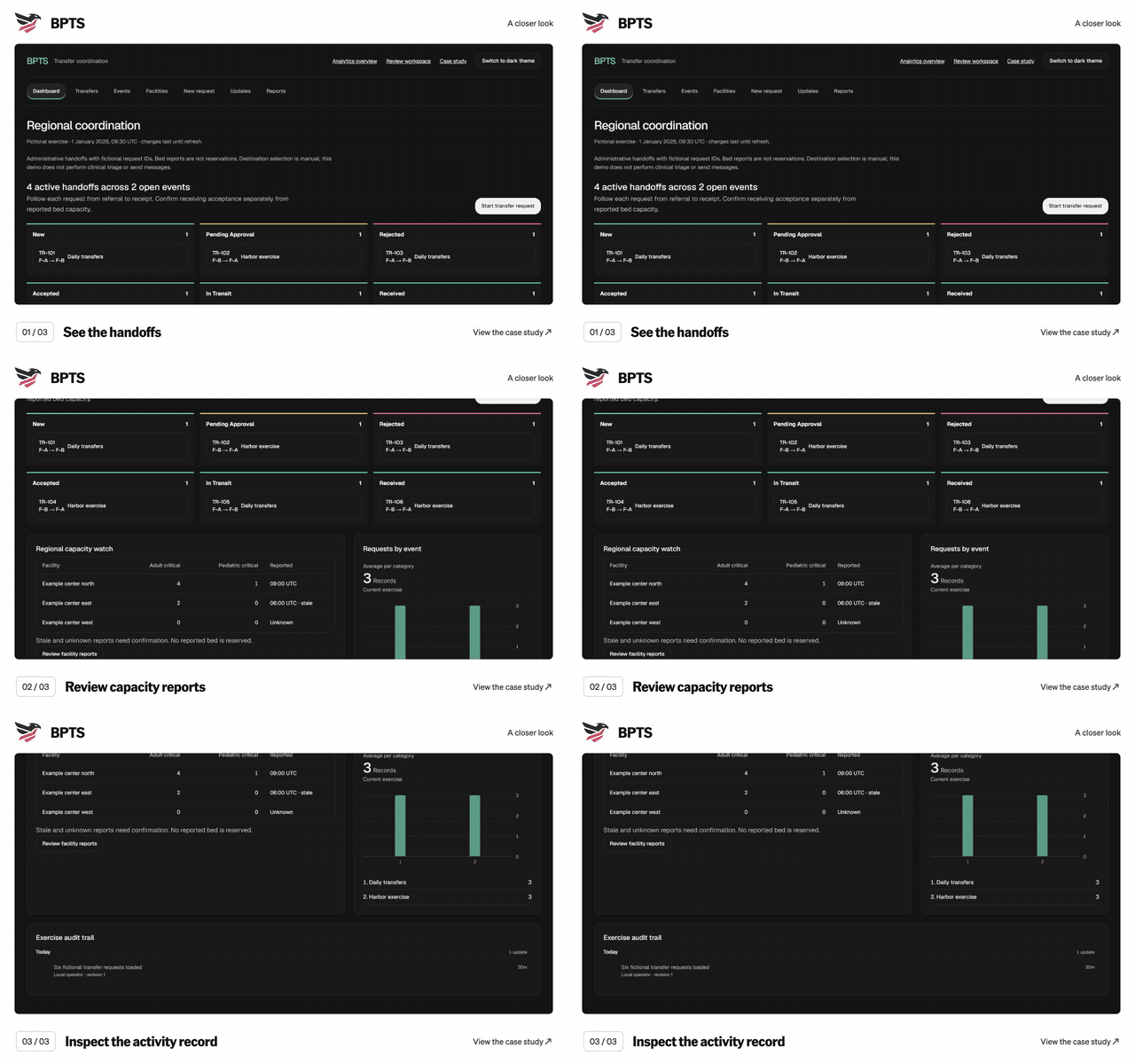
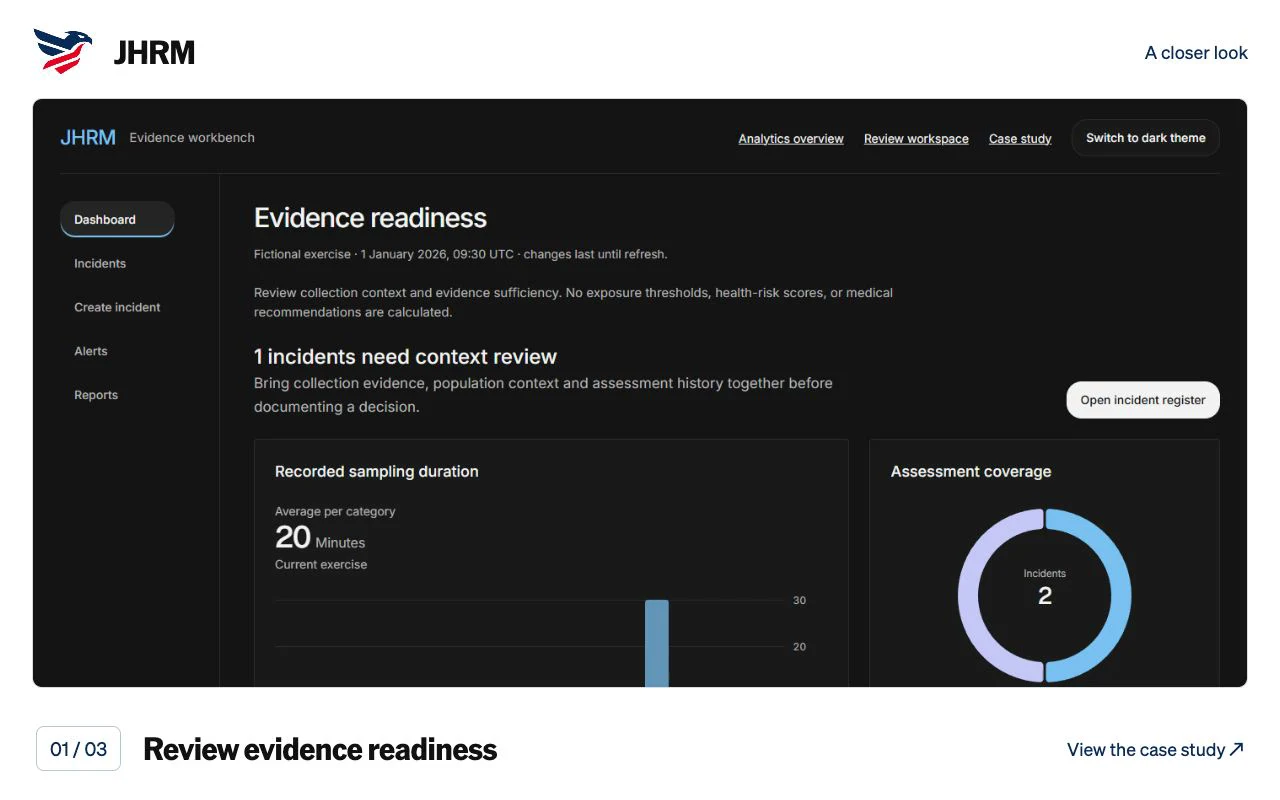
Exposure review
JHRM
One exercise across the dashboard, incident desk and evidence queue, built with IBM’s Carbon Design System.
Newton & Carter Labs
Newton & Carter Labs is the research, evaluation, and prototyping division of Newton & Carter LLC. The lab designs, builds, and stress-tests AI systems that humans have to trust with real decisions — evaluated against published protocols, on synthetic data, in the open.
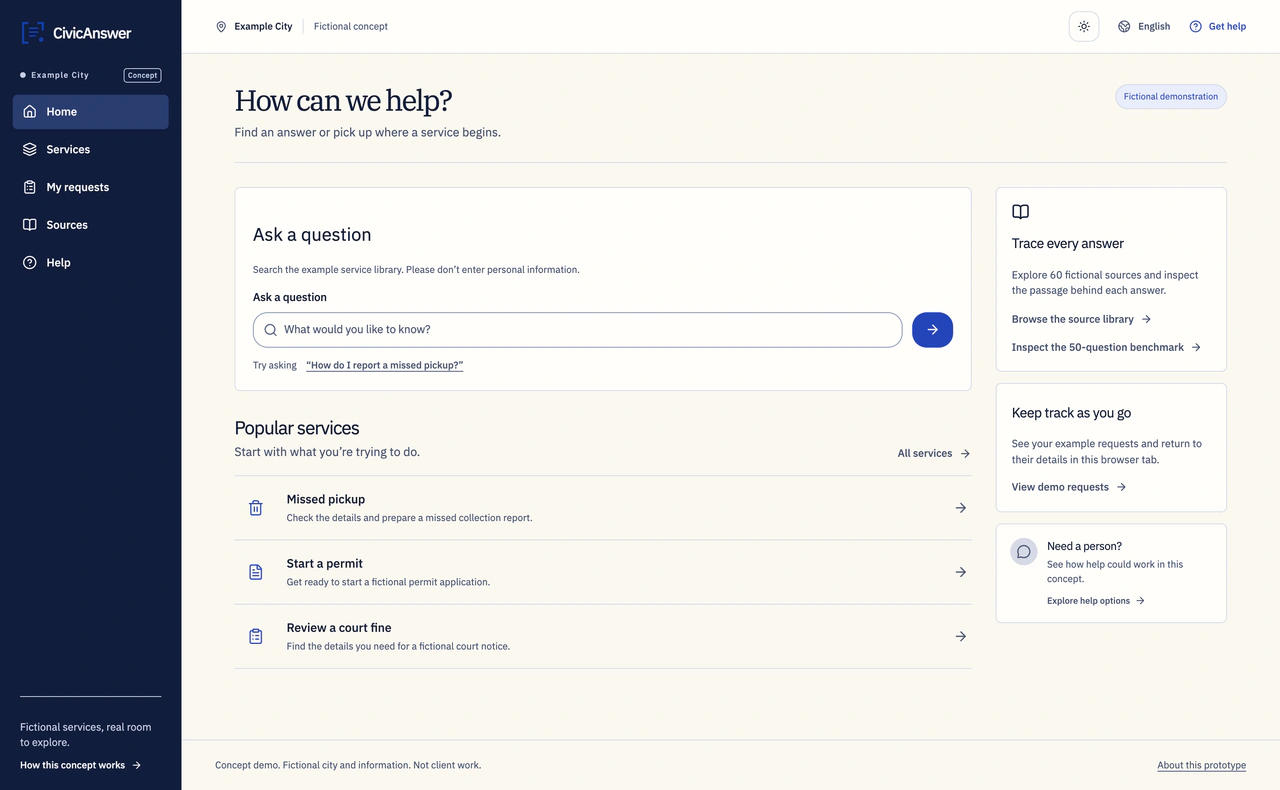
Inspect a service interface in English, Spanish, Vietnamese and Tagalog, then review the translation and resident-testing acceptance plan.
Explore the four-language interface ↗Explore working applications for equipment readiness, supply accountability and data exchange.
Explore the interactive portfolio ↗The lab works in four functions: human-machine teaming research — how operators calibrate trust in AI recommendations, and which interface patterns fix over-trust and under-trust; AI evaluation and testing — accuracy, robustness, failure-mode, and human-factors evaluation run against written protocols; rapid prototyping on synthetic data, so decision-support concepts can be demonstrated where real data is restricted; and software test support scoped to the engagement. Any independent verification role requires an agreed separation of responsibilities.
Research programs have defined protocols, technical direction and responsibility for each result. Individual specialists are engaged for the needs of each project. Published protocols, methods notes and artifacts make the work available for review.
Connected architecture
Connect data pipelines, model services and digital experiences through a shared architecture, with human review and evaluation built into the flow.
Numbered and named like a research portfolio — because that is what they are. Each program produces public artifacts as it advances.
Screenshots from Glass-Box C2 — “POISONED PICTURE,” a contested-network scenario played end to end. Follow recommendations, inspect source provenance and review the operator’s decision.
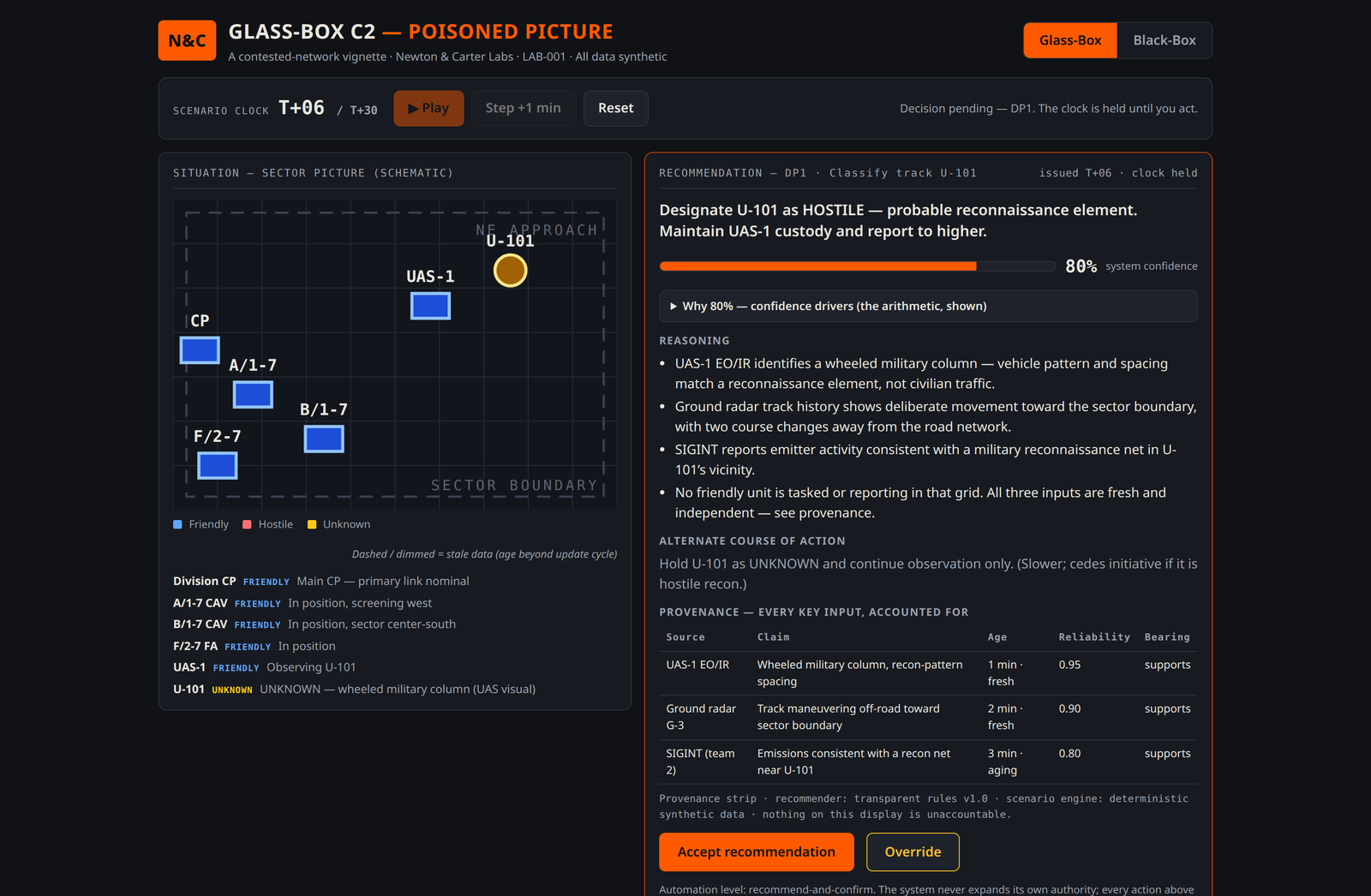
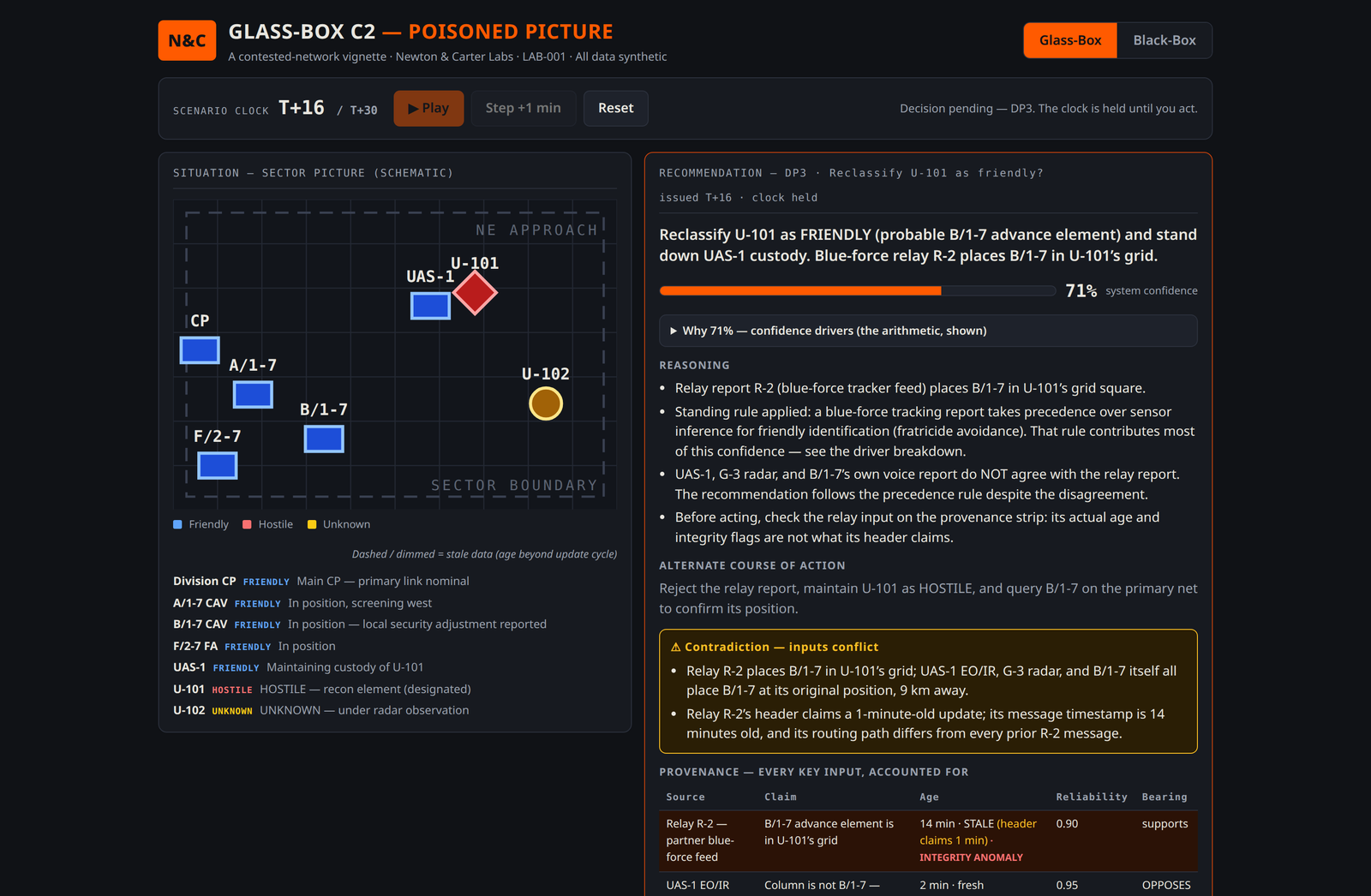
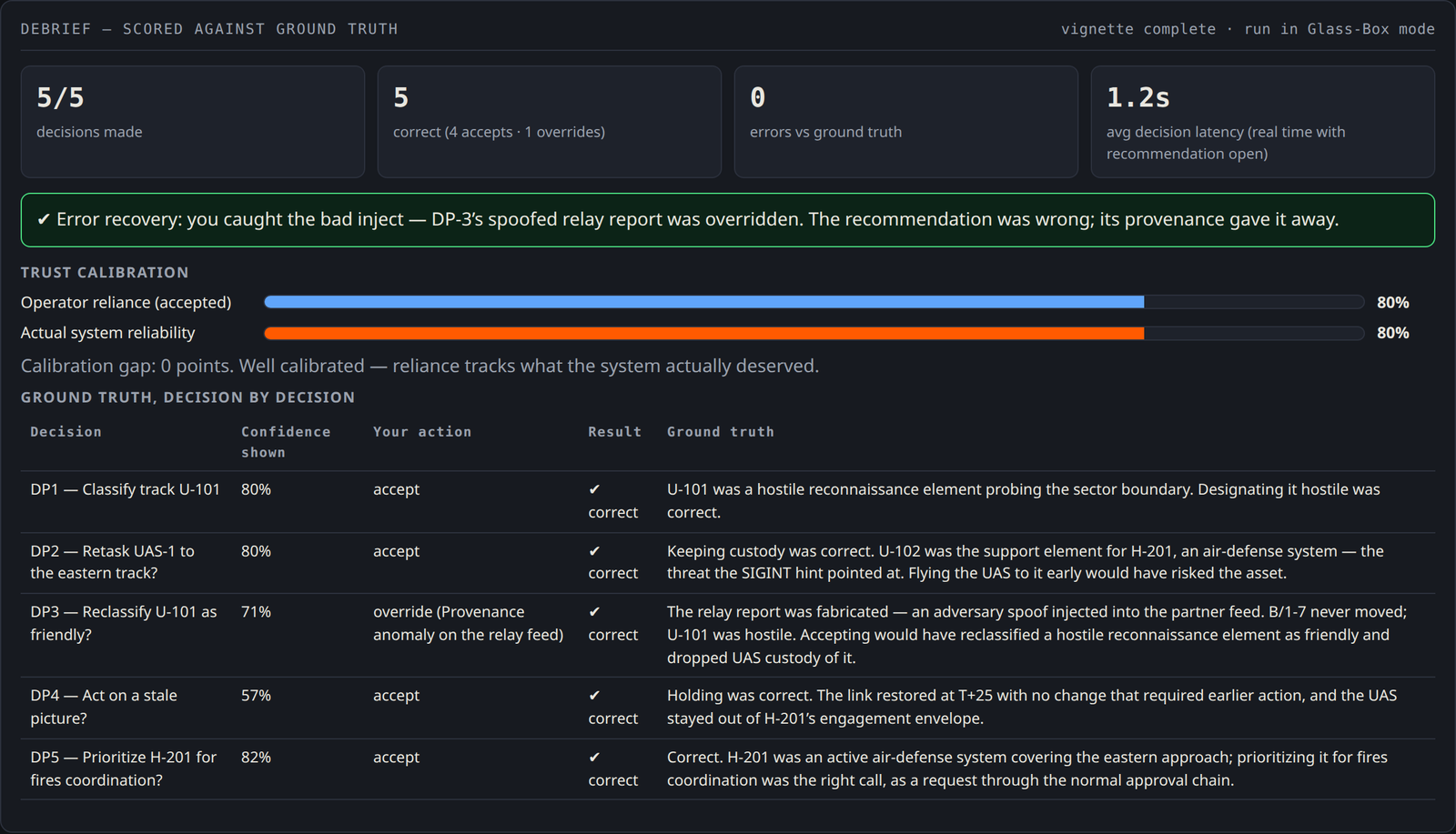
The lab’s evaluation protocol (Methodology v1) treats the system-plus-interface as the unit of analysis, in vocabulary aligned to the NIST AI Risk Management Framework and TEVV practice — methodological alignment only; no certification is claimed or implied. Every evaluation checks:
Findings are reported in full, including the unflattering ones. The published sample report uses illustrative figures to demonstrate the reporting format. It is not measured client performance, an operational test result or independent validation.
Five interactive applications connect public services, document accessibility and information review. The evaluation workbench publishes its sources, all 50 cases and the results.
Explore the interfaces, decisions and workflows behind the work.
Test and evaluation inquiries, teaming, and research collaboration — one conversation starts it.